0%

LED Traffic Signal Heads are the bright, energy-efficient faces of modern traffic control systems. They use light-emitting diodes instead of traditional incandescent bulbs. Behind each red, yellow, or green lens, many small diodes create a focused, highly visible signal. The U.S. Federal Highway Administration reported that LED traffic signal modules can reduce energy consumption by approximately 80 to 90 percent compared with incandescent alternatives. The same FHWA technical brief, LED Traffic Signal Modules (FHWA-HRT-07-004), also highlighted longer service life and reduced maintenance needs.

Their operation is simple, but the engineering is not. An electrical controller sends power to the selected LED circuit. The diodes then convert electrical energy into visible light with limited heat production. A red signal may appear instantly, even during cold weather or brief voltage changes. This quick response supports clearer recognition at busy intersections. However, efficiency alone does not guarantee safety. Lens design, optical intensity, cabinet compatibility, weather sealing, and proper installation all matter.

Consider a rainy junction at dusk. Water covers the pavement, headlights create glare, and drivers need a clean signal outline. A well-designed LED Traffic Signal Heads system helps preserve that visual separation. Still, no product performs perfectly in every environment. Poor maintenance, aging wiring, or incorrect replacement modules can weaken performance. The Institute of Transportation Engineers and relevant national standards provide useful guidance, but local agencies must verify compatibility and photometric requirements. Understanding how these signals work makes purchasing decisions more practical, measurable, and accountable.
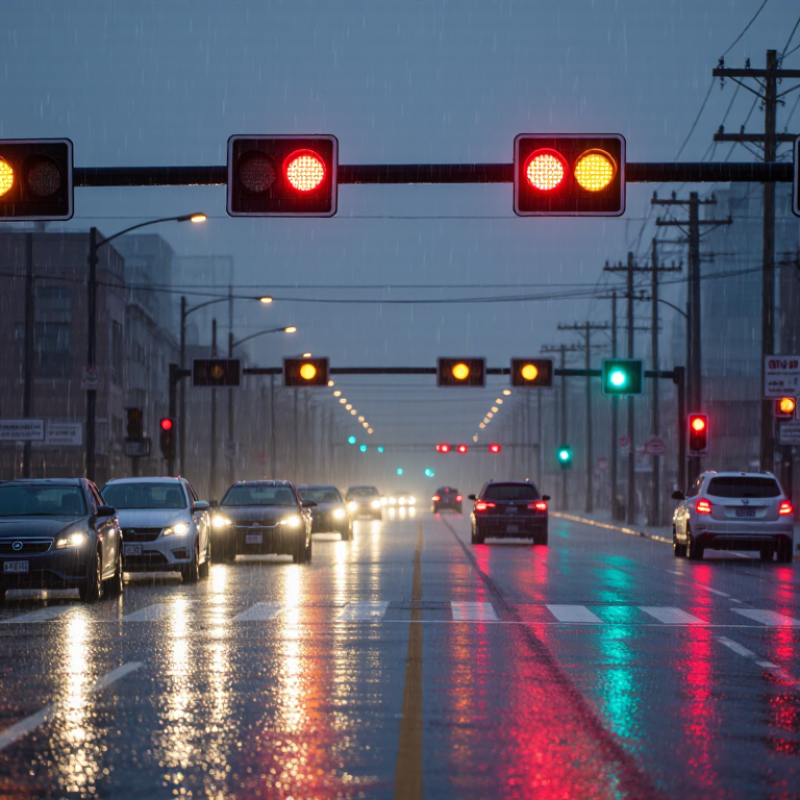
What Are LED Traffic Signal Heads and How Do They Work?

What Are LED Traffic Signal Heads?

LED traffic signal heads are the visible housings installed above or beside road lanes. They display red, yellow, and green indications to control vehicle and pedestrian movements. Each signal head contains LED modules, optical lenses, a protective enclosure, and often a visor or backplate. These parts help drivers see the correct color in bright sunlight, rain, fog, and darkness.

Inside the module, many small light-emitting diodes produce light when electric current passes through them. A driver regulates that current and supports steady brightness. The traffic controller sends timed electrical signals to activate each color. Optical elements direct the light toward approaching road users instead of wasting it in wide angles. The result is a clear indication with lower energy use than older lamp-based systems.

They are not maintenance-free.

Technicians still inspect lenses, wiring, seals, mounting hardware, and brightness. Moisture, dirt, damaged visors, or partial LED failure can reduce visibility. A signal may remain illuminated while appearing uneven or weak, which is easy to overlook during a quick inspection.

In my experience, reliable operation depends on correct alignment and scheduled testing, not only on the LED itself. Standards and maintenance procedures also vary by location, so installation teams must follow approved traffic-control requirements and documented electrical practices.

Key Components of an LED Traffic Signal Head

An LED traffic signal head is a coordinated optical and electrical system, not simply a brighter lamp. Its housing protects internal parts from rain, dust, vibration, and temperature changes. Inside, an LED array produces light through multiple small diodes. A colored lens then shapes the beam and improves visibility from different approach angles.

The driver converts incoming power into a stable current for the LED array. It also helps control heat, flicker, and electrical stress. A failed driver can darken the entire indication. That weakness is easy to overlook. Surge protection, wiring connectors, seals, and mounting brackets support dependable operation in harsh roadside conditions. Some modern signal heads include monitoring circuits that detect low output or partial failure.

The Federal Highway Administration has reported typical LED signal modules using about 8–15 watts, compared with roughly 69–135 watts for incandescent units, depending on design and color. The U.S. Department of Energy also states that LEDs use at least 75% less energy and can last up to 25 times longer than incandescent lighting. These figures are useful, but not universal. Flash timing, ambient temperature, lens aging, and maintenance affect real results. In field inspections, a clean lens may matter as much as a high-efficiency diode. That is an imperfect truth. A technically advanced signal head still depends on careful installation, regular testing, and reliable connections.

How LED Traffic Signal Heads Produce and Display Light

LED traffic signal heads produce light through arrays of light-emitting diodes, or LEDs. Each diode converts electrical energy into visible light when current passes through its semiconductor material. A control circuit regulates that current, helping the signal maintain a steady brightness during voltage changes.

The color usually comes from the LED material itself, not from a colored bulb. Red, yellow, and green LEDs emit specific wavelengths that match traffic signal requirements. A clear or tinted lens then shapes and spreads the light. Inside the housing, reflectors and optical elements guide the beam toward drivers, cyclists, and pedestrians. The result is a bright display with less wasted light.

The driver also monitors electrical performance and limits heat. That matters because excessive heat can reduce LED life and brightness. In field inspections, technicians often check for dark sections, cracked lenses, moisture, or uneven illumination. Even a small failure can make a signal look confusing from a distance. No optical system is perfectly uniform. Viewing angle, sunlight, dirt, and lens wear still affect what people see. This is one area where specifications alone may not tell the whole story. Practical visibility testing remains important, especially at intersections with strong afternoon glare.

What Are LED Traffic Signal Heads and How Do They Work? — How LED Traffic Signal Heads Produce and Display Light

Key technical characteristics and operating principles of LED traffic signal heads. Values marked as typical may vary by signal size, design, traffic standard, and operating environment.

Category Component or Parameter Typical Data How It Works or Why It Matters
Signal Format Common signal module diameters 200 mm and 300 mm The circular module size determines the visible signal area and is selected according to roadway design requirements and applicable traffic standards.
Light Source Light-emitting diodes Solid-state semiconductor devices When electrical current passes through an LED junction, electrons and holes recombine and release energy as photons, producing visible light without a filament.
Red Signal Dominant visible wavelength Approximately 620–750 nm Red LEDs emit light in the long-wavelength portion of the visible spectrum and are used to indicate that traffic must stop.
Amber Signal Dominant visible wavelength Approximately 585–600 nm Amber light provides a high-visibility warning indication and commonly signals a transition between movement phases.
Green Signal Dominant visible wavelength Approximately 495–570 nm Green LEDs produce short-to-medium wavelength visible light and indicate that a permitted movement may proceed when conditions are safe.
LED Array Multiple LEDs arranged behind the lens Distributed array rather than one single lamp The array spreads light across the signal face. If one LED fails, the remaining LEDs can continue operating, although the module may require replacement if its output falls below the required level.
Electrical Input Power conversion and current control Controller-dependent AC input with regulated LED drive current An internal driver converts and regulates incoming power so the LEDs receive a stable current. Current regulation helps maintain consistent brightness and protects the LED junctions.
Typical Power Use Energy consumption per signal module Often about 8–20 W for a 200 mm module Actual consumption depends on module diameter, optical output, driver efficiency, temperature, and monitoring features. LED modules generally use less power than comparable incandescent signal lamps.
Optical System Lens, reflector, and internal optics Directional light distribution across the viewing angle Optical elements collect and redirect LED light so the signal is bright enough for approaching drivers while limiting unnecessary light outside the intended viewing area.
Signal Face Colored lens or neutral lens with colored LEDs Red, amber, or green indication The displayed color can be produced by the LED spectrum, the lens, or a combination of both. The lens also protects internal components from weather and impact.
Sun Phantom Reduction Resistance to false or washed-out appearance Improved optical contrast compared with many older lamp designs LEDs emit light more directionally and can be paired with visors and optical shields, helping reduce the appearance of a false signal caused by direct sunlight.
Visibility Daytime and nighttime operation Controlled brightness for changing ambient conditions Signal modules are designed to remain visible in daylight and at night. Some systems use dimming or monitoring functions to manage brightness and power according to operating conditions.
Thermal Management Heat dissipation from LEDs and driver Heat-conductive circuit boards and ventilated or thermally designed housing Although LEDs are efficient, they still generate heat. Removing heat helps preserve light output, electrical stability, and operating life.
Operating Life Expected LED service life Commonly rated around 50,000–100,000 hours LED life is generally specified as the time until light output reaches a defined percentage of its initial value, rather than the point at which every LED stops working.
Response Time Time required to reach visible output Typically much faster than incandescent lamps LEDs produce light electronically and do not require a filament to heat up, allowing rapid switching between signal states.
Failure Monitoring Electrical and optical status detection May monitor current, voltage, or minimum light output Traffic controllers or monitoring circuits can detect abnormal electrical conditions or reduced module output and report a potential signal fault.
Weather Protection Outdoor enclosure and sealing Designed for rain, dust, ultraviolet exposure, and temperature changes The housing, gasket, lens, and mounting components protect the electronics so the signal can operate reliably in outdoor traffic environments.
Operating Principle From electrical command to displayed signal Controller → driver → LED array → optics → driver-visible indication The traffic controller selects the signal state, the driver supplies controlled current, the LED array generates the appropriate color, and the optical system directs that light toward road users.

Note: Electrical ratings, photometric performance, environmental ratings, and service-life claims should always be verified against the applicable traffic-signal specification and the individual module’s technical documentation.

How Signal Phases Direct Traffic Movement

LED traffic signal heads use light-emitting diodes to display red, yellow, and green indications. Their bright, focused output remains visible in rain, glare, and nighttime conditions. The signal head does not decide traffic movement alone. A controller assigns time to each signal phase, while detectors may measure vehicles, bicycles, or pedestrians waiting at the intersection.

A phase is a planned movement, such as eastbound through traffic or a protected left turn. Engineers separate conflicting movements, then provide a change interval before releasing another group. The Federal Highway Administration estimates more than 330,000 signalized intersections in the United States, making phase design a major operational concern. NCHRP Report 812 explains that timing plans should balance delay, safety, pedestrian needs, and changing traffic demand.

The sequence is precise.

A green indication permits movement, yellow warns of the upcoming change, and red establishes separation. Pedestrian phases can run beside traffic phases when crossings do not conflict. The 2023 Manual on Uniform Traffic Control Devices uses a 3.5-foot-per-second walking speed for pedestrian clearance calculations. That number matters when a child, wheelchair user, or older adult needs extra time. Real streets are messier. A mathematically efficient phase may still feel unsafe during rain or heavy turning traffic. LED heads improve recognition, but they cannot repair poor detection or careless timing. Signal engineers must review field observations, collision patterns, queue lengths, and public feedback before adjusting the plan.

Benefits, Limitations, and Maintenance Requirements

LED traffic signal heads use arrays of light-emitting diodes to display red, yellow, and green indications. When a controller sends electrical power, the selected diodes emit light through shaped lenses. The optics spread that light across the required viewing area. Compared with incandescent lamps, LEDs usually consume less energy and last longer. Their focused output can also remain visible in bright daylight, reducing replacement interruptions for road crews.

Yet LED performance is not effortless. Individual diodes can fail, creating dark spots that may be difficult to notice from a distance. Heat, moisture, vibration, and voltage irregularities can shorten service life. Some older detection systems may also respond differently to LED signals, requiring compatibility checks. Brightness can vary as components age. Color appearance may change when lenses become cloudy or contaminated. These limitations are easy to underestimate.

Maintenance should follow local traffic authority requirements and the equipment’s service documentation. Inspectors should check lenses, visors, housing seals, mounting hardware, and cable connections. Clean lenses carefully; abrasive tools can create permanent scratches. Technicians should verify signal timing and electrical readings without disturbing live traffic operations. Photometric testing can identify weak or uneven indications before drivers report them. Keep records of failures, cleaning dates, and test results. Small omissions matter. One overlooked gasket can allow condensation inside the head, damaging connections over time. Field assumptions are not enough. Regular inspection still needs qualified judgment.

FAQS

What are LED traffic signal heads?

They are visible housings beside or above road lanes. They display red, yellow, and green indications. Each housing contains LED modules, lenses, wiring, and protective parts.

How do LED traffic signal heads produce light?

Small diodes emit light when controlled electrical current passes through them. A driver regulates current and supports steady brightness. Optical elements direct the light toward road users.

How are signal colors created?

The LED material usually creates the red, yellow, or green color. The lens then shapes and spreads the light. It is not simply a colored bulb.

What are the main benefits of LED signal heads?

They usually use less energy than older lamp-based systems. They can last longer and reduce replacement interruptions. Focused light may remain visible under strong daylight.

Are LED traffic signal heads maintenance-free?

No. Not maintenance-free. Technicians must inspect lenses, seals, wiring, mounting hardware, and brightness. A signal can stay lit while showing dark sections or uneven illumination.

What can reduce signal visibility?

Dirt, moisture, cracked lenses, damaged visors, and heat can weaken visibility. Afternoon glare may hide a weak indication. A quick glance can mislead.

What failures should technicians look for?

They should check dark LED sections, cloudy lenses, condensation, loose cables, and damaged housings. Voltage irregularities and vibration can shorten service life. Small failures matter.

How should LED traffic signal heads be maintained?

Follow local traffic-control requirements and service documentation. Clean lenses with suitable materials, not abrasive tools. Record cleaning dates, failures, electrical readings, and test results.

Why is visibility testing still important?

Specifications cannot describe every real viewing condition. Photometric testing can reveal weak or uneven indications. Viewing angle, dirt, sunlight, and lens wear all affect what drivers see.

Conclusion

LED Traffic Signal Heads are electronic devices that use light-emitting diodes to control and display traffic signals at intersections, crossings, and other road locations. Unlike traditional signal systems, they are designed around arrays of small LEDs, optical lenses, signal housings, wiring, and control circuits. The LEDs produce light when electrical current passes through semiconductor materials, while lenses and colored filters help create a clear, focused red, yellow, or green indication that drivers and pedestrians can recognize from a distance.

Traffic controllers activate each signal color according to programmed phases, directing vehicles and pedestrians to stop, wait, or proceed in an organized sequence. LED Traffic Signal Heads offer strong visibility, lower energy consumption, long operating life, and improved reliability. However, they may still require inspection for dirt, moisture, wiring faults, damaged lenses, or failed LED modules. Regular cleaning, electrical testing, and timely replacement of defective components help maintain consistent performance and support safer, more efficient traffic movement.

Amelia

Amelia

Amelia is a dedicated marketing professional with a strong understanding of the company’s products, customers, and industry landscape. With a thoughtful, research-driven approach, she transforms complex product information into clear, practical, and engaging content that helps readers make informed......