Blog

China Top 10 Dynamic Message Signs Manufacturers?

China Top 10 Dynamic Message Signs Manufacturers?

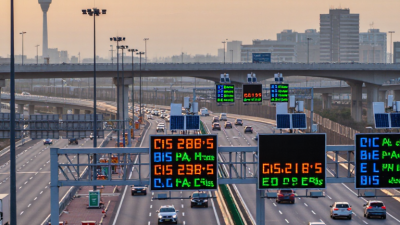
China’s Dynamic Message Signs industry has become a significant part of modern traffic management. Manufacturers now supply signs for expressways, urban roads, tunnels, bridges, ports, and emergency corridors. Their products often combine LED displays, solar power systems, wireless communication, radar detection, and cloud-based control platforms. Transportation technology specialist Dr. Robert L. Bertini has emphasized, “Traffic information is valuable only when it supports a safer and clearer decision.” This principle matters when comparing Chinese manufacturers. A bright display is not enough. Drivers need readable characters, stable brightness, fast updates, and reliable performance in rain, dust, heat, and freezing conditions. Real experience reveals the difference. A highway operator may inspect thousands of pixels before a holiday traffic surge. A tunnel manager may depend on one sign during smoke, flooding, or sudden congestion. Small failures can create large operational problems. Therefore, this review considers more than factory size or export claims. It examines product quality, message clarity, control compatibility, weather resistance, maintenance support, customization ability, and project experience. The leading suppliers do not all excel in the same area. Some focus on large motorway gantries. Others produce compact signs for city streets or portable warning units. A few provide stronger software than hardware, while some offer attractive prices but limited after-sales support. That weakness deserves attention. This China Top 10 Dynamic Message Signs Manufacturers guide aims to provide a practical comparison for transport authorities, contractors, system integrators, and international buyers. The ranking should not be treated as absolute. Project conditions vary, and manufacturer performance can change over time. Careful technical verification remains essential before procurement.
Read more »
Amelia By:Amelia - October 15, 2026
Why Choose Traffic Control Cabinet Assemblies?

Why Choose Traffic Control Cabinet Assemblies?

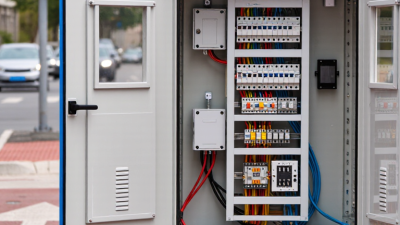
Traffic Control Cabinet Assemblies are the quiet operating core of modern signalized intersections. Behind each roadside door, controllers, power supplies, detectors, relays, terminals, and communication devices work together. A single loose connection can darken a busy junction. The Federal Highway Administration’s Traffic Signal Timing Manual, Second Edition, identifies signal operations as a practical tool for reducing delay, improving safety, and managing limited road capacity. That performance depends on dependable field hardware, not software alone. NEMA TS 2 also defines environmental, electrical, and operational requirements for traffic signal controllers and cabinets. These standards give engineers a baseline. They do not remove every installation risk. Gene Hawkins, P.E., a recognized traffic-signal engineer and former Texas transportation research leader, has said, “Reliable signal control starts with reliable field equipment.” His point is easy to test: inspect a cabinet after heavy rain, heat, vibration, and years of maintenance. Clean wiring matters. Clear labeling matters. Accessible components matter. Recent FHWA and NCHRP guidance also encourages agencies to consider lifecycle costs, cybersecurity, maintainability, and interoperability when upgrading traffic infrastructure. A low purchase price can become expensive when technicians need hours to diagnose a crowded cabinet. Traffic Control Cabinet Assemblies help standardize construction, simplify testing, and support consistent replacement planning. Still, no assembly is perfect. Specifications can be correct, yet field conditions may expose weak assumptions. Dust, condensation, aging connectors, or undocumented modifications can change the result. The better question is not whether a cabinet looks complete. It is whether the assembly remains safe, serviceable, and verifiable under real traffic conditions.
Read more »
Amelia By:Amelia - October 10, 2026
How to Choose the Best Pedestrian Push Buttons?

How to Choose the Best Pedestrian Push Buttons?

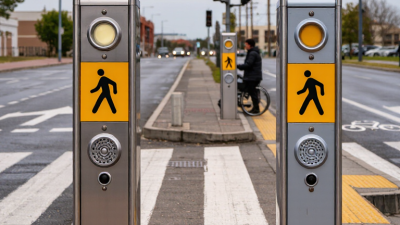
Choosing the right Pedestrian Push Buttons is a small decision with major safety consequences. At a signalized crossing, the button must be visible, reachable, durable, and easy to understand. A poorly positioned unit can leave a wheelchair user stretching toward traffic. A silent or confusing button can make a waiting pedestrian uncertain. The Federal Highway Administration’s Manual on Uniform Traffic Control Devices provides national guidance for pedestrian signal operation, accessibility, signing, and placement. Its recommendations show that button location cannot be separated from crossing geometry. The 2023 National Roadway Safety Strategy also emphasizes safer road design and more reliable pedestrian infrastructure. These reports support a practical point: equipment quality matters, but installation context matters just as much. The safety need is measurable. According to the National Highway Traffic Safety Administration’s 2022 traffic fatality data, 7,522 pedestrians died in traffic crashes in the United States. That figure does not identify one device as the solution. It does show why every crossing detail deserves careful review. A strong selection process examines activation force, weather resistance, feedback signals, vandal resistance, mounting height, and maintenance access. Audible and tactile confirmation can support people with visual impairments, while large symbols and contrasting surfaces improve recognition. No product fits every street. A quiet suburban crossing needs different feedback from a noisy urban intersection. That sounds obvious, yet specifications often overlook sound levels, winter gloves, or standing water. This guide compares the practical features, standards, and field conditions that help agencies choose Pedestrian Push Buttons with greater confidence. Always verify local requirements before procurement. Data changes, and real-world observation still matters.
Read more »
Amelia By:Amelia - October 5, 2026
2026 Top Types of Radar Vehicle Detection Systems

2026 Top Types of Radar Vehicle Detection Systems

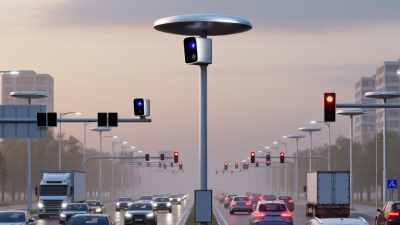
As transport networks become busier, reliable vehicle detection matters at intersections, parking facilities, toll points, and work zones. Radar Vehicle Detection Systems use reflected radio waves to identify moving or stationary vehicles, often in darkness or poor visibility. They can provide useful traffic data without placing sensors directly in every lane. Still, performance depends on installation and local conditions. This guide introduces common system types and where each may fit. Doppler radar measures changes in reflected signal frequency to estimate vehicle movement. Frequency-modulated continuous-wave radar can provide distance and speed information, while compact 24 GHz and 77 GHz units serve different detection needs. Some sensors monitor a single lane; others track several lanes or zones. The labels can overlap, so buyers should compare actual specifications rather than rely on product names alone. Details matter. Choosing a system involves more than detection range. Mounting height, road geometry, vehicle mix, weather exposure, and integration with existing controllers all affect results. A roadside unit aimed across multiple lanes may need careful calibration to avoid confusing adjacent traffic. Radar can also miss context that a camera provides, while cameras may struggle with glare or low light. Neither option is perfect. Site testing helps reveal these trade-offs before full deployment. The sections ahead compare major radar approaches, their strengths, limitations, and typical applications. They also outline practical questions for evaluating accuracy, coverage, installation effort, and maintenance. Specifications are a starting point, not a guarantee; real-world performance should be verified under the conditions the system will face.
Read more »
Seraphina By:Seraphina - September 30, 2026
China Top 10 Intelligent Transportation Systems Companies

China Top 10 Intelligent Transportation Systems Companies

China’s Intelligent Transportation Systems sector is moving from isolated pilot projects toward connected, data-driven mobility networks. Cameras, roadside sensors, traffic platforms, and vehicle-to-everything communication now shape daily travel. In 2023, China’s urbanization rate reached 66.16%, according to the National Bureau of Statistics. That shift increases pressure on roads, logistics hubs, and public transit. Intelligent systems must respond in real time. Grand View Research valued the global intelligent transportation market at approximately US$48.36 billion in 2023. It also expects strong growth through 2030. The U.S. Department of Transportation highlights safety, mobility, and system efficiency as core ITS priorities. These priorities are visible in China’s cities, where signal timing changes can reduce queues at busy intersections. Small improvements matter. Professor Joseph Sussman of MIT has described transportation as “a system of systems.” This idea is highly relevant to China’s leading technology companies. Their products often connect vehicles, roads, cloud platforms, maps, and municipal control centers. The strongest firms do more than sell hardware. They integrate complex services under demanding operating conditions. This overview introduces China’s Top 10 Intelligent Transportation Systems Companies. The selection considers technology capability, project experience, platform integration, commercial reach, and public-sector credibility. No ranking is perfect. Corporate disclosures differ, and independent performance data remains uneven. That limitation deserves attention. A polished dashboard does not always prove safer roads or faster journeys. Readers should examine deployment scale, measurable results, cybersecurity practices, and long-term reliability before judging any company’s leadership.
Read more »
Evelyn By:Evelyn - September 22, 2026
What Are LED Traffic Signal Heads and How Do They Work?

What Are LED Traffic Signal Heads and How Do They Work?

LED Traffic Signal Heads are the bright, energy-efficient faces of modern traffic control systems. They use light-emitting diodes instead of traditional incandescent bulbs. Behind each red, yellow, or green lens, many small diodes create a focused, highly visible signal. The U.S. Federal Highway Administration reported that LED traffic signal modules can reduce energy consumption by approximately 80 to 90 percent compared with incandescent alternatives. The same FHWA technical brief, LED Traffic Signal Modules (FHWA-HRT-07-004), also highlighted longer service life and reduced maintenance needs. Their operation is simple, but the engineering is not. An electrical controller sends power to the selected LED circuit. The diodes then convert electrical energy into visible light with limited heat production. A red signal may appear instantly, even during cold weather or brief voltage changes. This quick response supports clearer recognition at busy intersections. However, efficiency alone does not guarantee safety. Lens design, optical intensity, cabinet compatibility, weather sealing, and proper installation all matter. Consider a rainy junction at dusk. Water covers the pavement, headlights create glare, and drivers need a clean signal outline. A well-designed LED Traffic Signal Heads system helps preserve that visual separation. Still, no product performs perfectly in every environment. Poor maintenance, aging wiring, or incorrect replacement modules can weaken performance. The Institute of Transportation Engineers and relevant national standards provide useful guidance, but local agencies must verify compatibility and photometric requirements. Understanding how these signals work makes purchasing decisions more practical, measurable, and accountable.
Read more »
Amelia By:Amelia - September 22, 2026
China Top Traffic Signal Controllers Suppliers

China Top Traffic Signal Controllers Suppliers

China has become an important sourcing base for Traffic Signal Controllers used in urban roads, highways, industrial parks, and smart transport projects. Its manufacturers offer varied solutions, from compact two-phase controllers to networked systems supporting coordinated intersections. However, supplier selection requires more than comparing prices or product photos. Performance depends on cabinet design, timing accuracy, communication stability, environmental protection, and after-sales support. This guide reviews China’s leading Traffic Signal Controllers suppliers through practical and technical criteria. It considers manufacturing experience, product certifications, testing procedures, customization capability, and project references. A reliable supplier should explain how its controller performs during heat, heavy rain, voltage fluctuations, and continuous operation. Clear wiring diagrams matter. So does documentation. Buyers should also examine firmware updates, spare-part availability, and response times when faults occur. No supplier is perfect. Some companies may show strong hardware but limited international service. Others may offer advanced software without enough field experience. That distinction matters. The best choice depends on road layout, traffic volume, communication infrastructure, and local operating conditions. This overview aims to provide a balanced starting point for engineers, contractors, distributors, and public-sector buyers. It does not replace on-site testing or professional assessment. Instead, it highlights the details that deserve closer attention before a purchase decision. Reliable traffic control begins with careful evaluation, realistic specifications, and suppliers willing to support their equipment beyond delivery.
Read more »
Amelia By:Amelia - September 22, 2026