0%

China’s Dynamic Message Signs industry has become a significant part of modern traffic management. Manufacturers now supply signs for expressways, urban roads, tunnels, bridges, ports, and emergency corridors. Their products often combine LED displays, solar power systems, wireless communication, radar detection, and cloud-based control platforms.

Transportation technology specialist Dr. Robert L. Bertini has emphasized, “Traffic information is valuable only when it supports a safer and clearer decision.” This principle matters when comparing Chinese manufacturers. A bright display is not enough. Drivers need readable characters, stable brightness, fast updates, and reliable performance in rain, dust, heat, and freezing conditions.

Real experience reveals the difference.

A highway operator may inspect thousands of pixels before a holiday traffic surge. A tunnel manager may depend on one sign during smoke, flooding, or sudden congestion. Small failures can create large operational problems. Therefore, this review considers more than factory size or export claims. It examines product quality, message clarity, control compatibility, weather resistance, maintenance support, customization ability, and project experience.

The leading suppliers do not all excel in the same area. Some focus on large motorway gantries. Others produce compact signs for city streets or portable warning units. A few provide stronger software than hardware, while some offer attractive prices but limited after-sales support.

That weakness deserves attention.

This China Top 10 Dynamic Message Signs Manufacturers guide aims to provide a practical comparison for transport authorities, contractors, system integrators, and international buyers. The ranking should not be treated as absolute. Project conditions vary, and manufacturer performance can change over time. Careful technical verification remains essential before procurement.
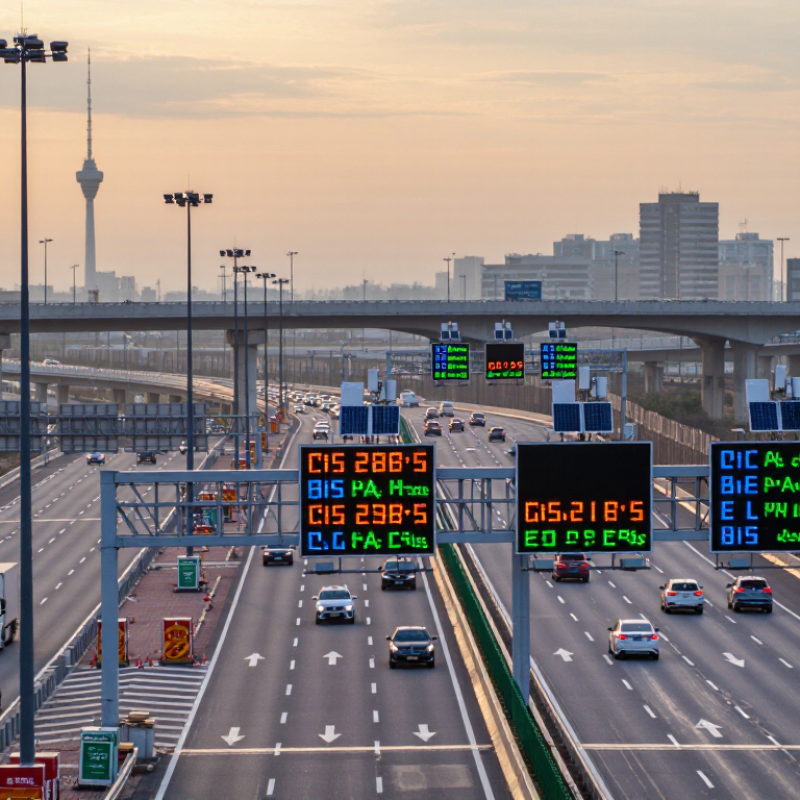
China Top 10 Dynamic Message Signs Manufacturers?

China’s Dynamic Message Sign Market: Types, Standards, and Key Data

China’s dynamic message sign market serves expressways, urban intersections, tunnels, ports, and temporary roadworks. Common types include full-color LED variable message signs, lane-control displays, speed warning boards, and portable trailers. Each type matches a different viewing distance, installation method, and traffic environment.

A reliable China top ten manufacturers list should examine more than production volume. Engineers usually compare pixel pitch, luminance, viewing angle, refresh rate, power consumption, cabinet sealing, and maintenance access. Outdoor units often require strong weather protection, stable thermal control, and clear visibility under direct sunlight. Emergency messages should remain readable within seconds. Small details matter.

Compliance also shapes procurement. Buyers should check the GB 5768 series for road traffic signs, applicable JT/T requirements, electrical safety, electromagnetic compatibility, and local transportation specifications. IP ratings, salt-spray resistance, temperature testing, and controller reliability deserve documented evidence. Factory audits and sample testing reveal more than brochures. Sometimes, data sheets look impressive but omit nighttime glare or repair time. That gap needs attention. A practical evaluation should record response latency, brightness adjustment, failure rates, and software compatibility during field trials. Market data should also separate project value from shipment quantity, because one large expressway contract can distort annual rankings. อาคารจีเอ็มเอ็ม

Ranking Criteria: EN 12966, NTCIP 1203, IP65, and ISO 9001

Selecting China’s top ten dynamic message sign manufacturers requires more than comparing prices or display brightness. The ranking should begin with documented compliance, independent testing, and consistent production records. EN 12966 matters because it addresses visibility, photometric performance, environmental durability, and safety for variable message signs. Test reports should identify the exact product model, not merely describe a product family. Unverified claims deserve careful scrutiny.

NTCIP 1203 compliance shows whether signs can communicate with traffic management systems through recognized control objects and commands. This supports smoother integration with existing roadside networks. IP65 protection is also essential. A qualified enclosure should resist dust and water jets during harsh roadside conditions. ISO 9001 certification indicates controlled processes, but certification alone cannot prove every sign performs well. Factory audits, sample inspections, and traceable corrective actions provide stronger evidence.

Practical ranking should include LED uniformity, viewing distance, power stability, cabinet workmanship, and replacement support. Engineers can inspect sealed doors, cable glands, ventilation paths, and controller response during a site test. Field experience often reveals weaknesses that brochures hide. No ranking is perfect. A manufacturer may pass laboratory testing yet struggle with documentation or after-sales response. That limitation should remain visible in the assessment. Reliable comparisons depend on current certificates, witnessed testing, and clear records for each evaluated model.

China Top 10 Dynamic Message Signs Manufacturers — Ranking Criteria: EN 12966, NTCIP 1203, IP65, and ISO 9001
Rank Anonymous Manufacturer Profile Overall Score EN 12966 Position NTCIP 1203 Support Ingress Protection ISO 9001 Status Typical Display Format Control & Communication Typical Warranty Best-Fit Application
1 Manufacturer A 94/100 Compliant configurations available Available IP65 front and rear Certified quality system Full-color LED, 1–3 lines Ethernet, fiber, 4G/5G, SNMP 5 years Highway and urban traffic management
2 Manufacturer B 92/100 Compliant configurations available Available IP65 front and rear Certified quality system Amber or full-color LED, 1–4 lines Ethernet, fiber, cellular modem 5 years Expressways and tunnel approaches
3 Manufacturer C 90/100 Compliant configurations available Available on request IP65 enclosure Certified quality system Full-color LED, 2–4 lines Ethernet, RS-485, 4G, web interface 3–5 years Municipal roads and smart-city projects
4 Manufacturer D 88/100 Project documentation required Available IP65 front and rear Certified quality system Amber LED, 1–3 lines Ethernet, fiber, RS-232/485 3 years Lane-control and incident warning signs
5 Manufacturer E 86/100 Compliant configurations available Gateway integration available IP65 enclosure Certified quality system Full-color LED, 1–3 lines Ethernet, 4G, industrial controller 3 years Portable and permanent roadside signs
6 Manufacturer F 84/100 Compliance evidence by project Available on request IP65 front and rear Certified quality system Amber or red LED, 1–2 lines Ethernet, RS-485, cellular modem 3 years Work-zone and temporary traffic control
7 Manufacturer G 82/100 Technical file available Protocol adaptation available IP65 enclosure Certified quality system Full-color LED, 1–4 lines Ethernet, Wi-Fi, 4G, API integration 3 years Urban information and parking guidance
8 Manufacturer H 80/100 Selected configurations Optional gateway IP65 front and rear Certified quality system Amber LED, 1–3 lines Ethernet, RS-232/485, 4G 2–3 years Regional highways and municipal roads
9 Manufacturer I 78/100 Model-specific verification Custom integration IP65 enclosure Certified quality system Full-color LED, 1–2 lines Ethernet, 4G, local controller 2–3 years City streets and campus traffic systems
10 Manufacturer J 76/100 Available for selected models Confirm before purchase IP65 enclosure Certified quality system Amber or red LED, 1–3 lines Ethernet, RS-485, optional 4G 2 years Cost-sensitive roadside deployments
Ranking factors include documented EN 12966 conformity, NTCIP 1203 interoperability, IP65 enclosure protection, ISO 9001 quality-system certification, controller compatibility, warranty coverage, and suitability for transport infrastructure projects. Certification and protocol claims should be confirmed against current model-specific test reports and project documentation.

Top 10 Chinese Dynamic Message Sign Manufacturers by Product Capability

China’s top 10 dynamic message sign manufacturers are best compared by product capability, not advertising claims. Their strengths usually include LED visibility, cabinet durability, controller compatibility, and software integration. Some factories focus on highway signs, while others serve tunnels, parking areas, ports, or urban traffic networks. This variety makes a simple ranking imperfect.

A capable manufacturer should provide high-brightness displays, automatic dimming, weather-resistant housings, and stable communication modules. Field experience matters too. Ask for test records, viewing-distance data, maintenance procedures, and sample messages under direct sunlight. A strong supplier can explain pixel pitch, power consumption, refresh rates, and spare-part availability without hiding behind vague language. Reliability is built in details.

Tips: Compare real samples, not only catalogs. Check messages at night and in rain. Request a factory audit when practical. Confirm software support and warranty terms in writing. One overlooked point is installation training; even excellent hardware can underperform when mounting, grounding, or calibration is handled poorly. I would also question unusually low prices. They may reflect efficient production, but they can also signal thinner materials or limited testing. Product capability should be judged across the full service life, not only at delivery.

China Top 10 Dynamic Message Signs Manufacturers

Product Capability Benchmark Based on Publicly Documented Offerings

The chart presents an anonymized capability benchmark across a representative group of leading Chinese dynamic message sign manufacturers. Values indicate the approximate number of manufacturers offering each capability in publicly documented product portfolios; no company or brand data is displayed.

Technical Comparison: ≥5,000 cd/m² Brightness, Pixel Pitch, and MTBF

China’s leading dynamic message sign manufacturers should be compared through measurable engineering data, not marketing claims. For highway use, a rated brightness of at least 5,000 cd/m² supports daytime readability under direct sunlight. The FHWA Changeable Message Sign Operation and Maintenance Handbook links visibility with luminance, contrast, viewing angle, and environmental control. Brightness alone is insufficient. A dirty front panel can reduce practical contrast sharply.

Pixel pitch affects character clarity and power demand. Common outdoor signs use 10–20 mm spacing, while smaller pitches can improve close-range detail. However, finer pixels increase LED quantity, heat, and maintenance exposure. EN 12966:2014+A1:2018 provides a useful framework for luminance, color, beam pattern, and performance classification. Buyers should request measured data, not only laboratory declarations. Field readings at noon are more convincing.

MTBF requires careful interpretation. A supplier may report 100,000 hours, but that figure can describe LED components rather than the complete sign. The U.S. Department of Transportation’s traffic-management guidance emphasizes maintainability, diagnostics, and environmental protection. Ask for cabinet temperature records, surge protection details, spare-part availability, and failure statistics from deployed sites. One weakness remains. Publicly audited MTBF data is uncommon. A realistic comparison should combine component ratings, warranty returns, service response time, and independent acceptance testing. Testing matters more.

Procurement Checklist: Warranty, Lifecycle Cost, Integration, and Compliance

China Top 10 Dynamic Message Signs Manufacturers?

Selecting among China’s top dynamic message sign manufacturers requires more than comparing unit prices. Request a written warranty covering displays, controllers, power supplies, and outdoor enclosures. Confirm repair response times, spare-part availability, and whether technicians can support remote diagnosis. A three-year warranty may sound attractive, but exclusions can make it weak. Read every condition carefully.

Calculate lifecycle cost over seven to ten years. Include energy use, software updates, cleaning, traffic control during repairs, and replacement modules. Ask for test reports showing brightness, viewing distance, temperature tolerance, and water resistance. A sign may look excellent in a factory. Field performance is different. Visit an operating installation if possible, and inspect pixels after rain, dust, and nighttime cycling.

Integration deserves equal attention. Confirm support for open communication protocols, central traffic platforms, emergency messages, and cybersecurity controls. Require interface documentation before signing the purchase order. Compliance records should match the destination market, including electrical safety, electromagnetic compatibility, structural loading, and road authority requirements. Keep evidence, not promises. One practical mistake is accepting translated certificates without checking their scope or validity. Independent inspection can expose this gap early. Procurement teams should also define acceptance tests, delivery milestones, training, and software ownership in the contract. Clear details prevent expensive arguments later.

FAQS

How should dynamic message sign manufacturers be compared?

Compare product capability, not advertising claims. Check visibility, cabinet durability, controller compatibility, and software integration. A ranking can mislead.

What display features matter for outdoor traffic signs?

Look for high brightness, automatic dimming, weather-resistant housings, and stable communication modules. Test messages under direct sunlight, rain, and darkness.

Which technical details should buyers request?

Ask about pixel pitch, power consumption, refresh rate, viewing distance, and temperature tolerance. Request written test records, not vague assurances.

Why should buyers inspect an operating installation?

Factory samples may look excellent. Field conditions differ. Inspect pixels after rain, dust, and repeated nighttime operation.

What should a written warranty include?

It should cover displays, controllers, power supplies, and outdoor enclosures. Confirm repair response times, spare parts, and remote diagnosis support.

How can buyers estimate the true lifecycle cost?

Calculate expenses over seven to ten years. Include energy, software updates, cleaning, repair traffic control, and replacement modules.

What integration questions should procurement teams ask?

Confirm open communication protocols, central traffic platform support, emergency messaging, and cybersecurity controls. Request interface documents before signing.

Which compliance and installation details deserve attention?

Check electrical safety, electromagnetic compatibility, structural loading, and road authority requirements. Also confirm mounting, grounding, calibration, training, and acceptance tests.

How can unusually low prices be evaluated?

Low prices may reflect efficient production. They may also mean thinner materials or limited testing. I would verify samples, factory records, and spare-part availability.

What contract terms can prevent later disputes?

Define delivery milestones, acceptance tests, software ownership, training, warranty conditions, and support duties. Keep evidence in writing. Promises alone are weak.

Conclusion

This article provides a practical overview of China’s Dynamic Message Signs market, covering major product types, application scenarios, technical standards, and purchasing considerations. It explains how standards such as EN 12966 and NTCIP 1203 support safety, communication, and interoperability, while IP65 protection and ISO 9001 certification help evaluate durability and manufacturing quality. The ranking framework focuses on product capability, engineering experience, customization, and compliance rather than brand popularity.

It also compares key technical indicators, including brightness levels of at least 5,000 cd/m², pixel pitch, viewing performance, power efficiency, environmental resistance, and mean time between failures. The final procurement checklist highlights warranty coverage, lifecycle cost, maintenance access, software and traffic-system integration, spare-parts availability, and documentation. By using these criteria together, buyers can identify suitable manufacturers, reduce long-term operating risks, and select Dynamic Message Signs that deliver reliable performance in demanding road and transportation environments.

Amelia

Amelia

Amelia is a dedicated marketing professional with a strong understanding of the company’s products, customers, and industry landscape. With a thoughtful, research-driven approach, she transforms complex product information into clear, practical, and engaging content that helps readers make informed......