0%

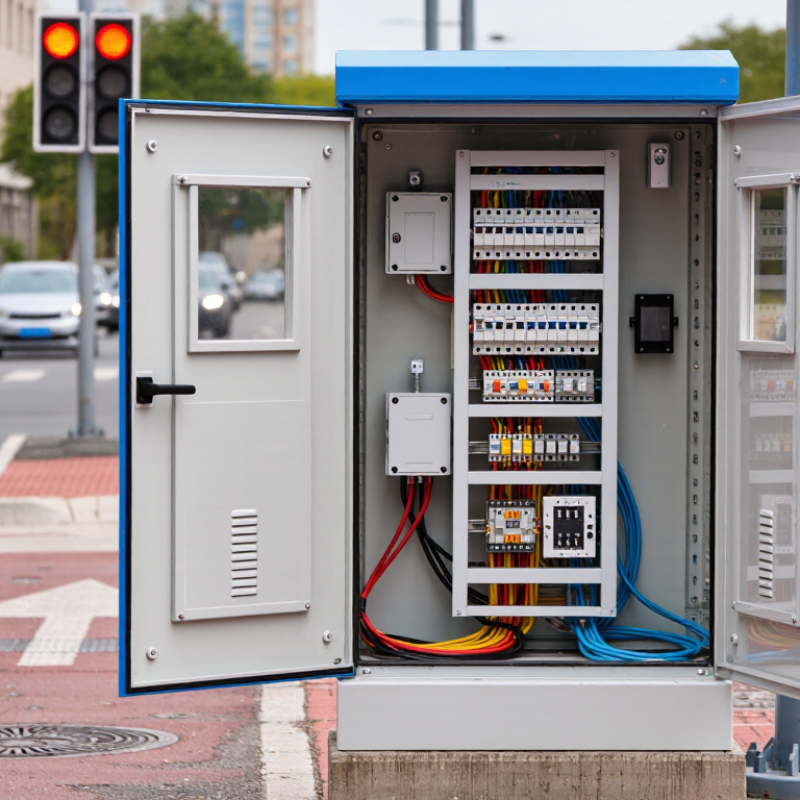
Traffic Control Cabinet Assemblies are the quiet operating core of modern signalized intersections. Behind each roadside door, controllers, power supplies, detectors, relays, terminals, and communication devices work together. A single loose connection can darken a busy junction.

The Federal Highway Administration’s Traffic Signal Timing Manual, Second Edition, identifies signal operations as a practical tool for reducing delay, improving safety, and managing limited road capacity. That performance depends on dependable field hardware, not software alone. NEMA TS 2 also defines environmental, electrical, and operational requirements for traffic signal controllers and cabinets. These standards give engineers a baseline. They do not remove every installation risk.

Gene Hawkins, P.E., a recognized traffic-signal engineer and former Texas transportation research leader, has said, “Reliable signal control starts with reliable field equipment.” His point is easy to test: inspect a cabinet after heavy rain, heat, vibration, and years of maintenance. Clean wiring matters. Clear labeling matters. Accessible components matter.

Recent FHWA and NCHRP guidance also encourages agencies to consider lifecycle costs, cybersecurity, maintainability, and interoperability when upgrading traffic infrastructure. A low purchase price can become expensive when technicians need hours to diagnose a crowded cabinet. Traffic Control Cabinet Assemblies help standardize construction, simplify testing, and support consistent replacement planning.

Still, no assembly is perfect. Specifications can be correct, yet field conditions may expose weak assumptions. Dust, condensation, aging connectors, or undocumented modifications can change the result. The better question is not whether a cabinet looks complete. It is whether the assembly remains safe, serviceable, and verifiable under real traffic conditions.
Why Choose Traffic Control Cabinet Assemblies?

What Traffic Control Cabinet Assemblies Include Under NEMA TS 2 Standards

Why Choose Traffic Control Cabinet Assemblies?

What Traffic Control Cabinet Assemblies Include Under NEMA TS 2 Standards

A traffic control cabinet assembly brings essential intersection equipment into one tested enclosure. Under NEMA TS 2 practices, the assembly commonly includes a cabinet, back panel, controller unit, malfunction management unit, and power distribution equipment. It may also contain load switches, flash transfer relays, detector interfaces, terminal blocks, and serial bus interface units.

The exact arrangement depends on the selected TS 2 cabinet type and the agency’s signal design. Type 2 systems often use serial communications between field modules, reducing extensive point-to-point wiring. This can simplify maintenance inside a crowded cabinet. Still, simpler wiring does not mean simple commissioning. Technicians must verify grounding, voltage levels, connector positions, and cabinet labeling.

Field experience shows that small details matter. A loose terminal can interrupt a complete intersection. An incorrectly configured monitor can create unnecessary signal shutdowns. That risk is easy to underestimate. Each assembly should receive documented wiring checks, insulation testing, functional testing, and simulated fault conditions before installation. Inspection records also support traceability when troubleshooting months later.

A cabinet may look complete and still miss an interface required by the project. This is where careful review matters. Engineers and inspectors should compare the assembly with approved plans, current NEMA TS 2 requirements, and local traffic authority specifications. Standards guide the design, but practical verification protects daily operation.

How Modular Assemblies Reduce Installation Time and Wiring Errors

Why Choose Traffic Control Cabinet Assemblies?

Modular traffic control cabinet assemblies move wiring, labeling, and terminal installation into a controlled workspace. At the site, crews connect defined interfaces instead of tracing loose conductors in wind, rain, or dark enclosures. McKinsey’s 2019 report, Modular Construction: From Projects to Products, found that modular methods can reduce project schedules by 20–50% and costs by up to 20% in suitable applications. Traffic cabinets are smaller than buildings, but the principle still applies. Repeatable work removes many field variables. It is not magic.

Each assembly can include a wiring schedule, point-to-point test record, torque log, and photo evidence. A technician checks terminal numbers before shipment. Another verifies them during commissioning. This creates accountability.

NIST’s Cost Analysis of Inadequate Interoperability in U.S. Capital Facilities estimated a $15.8 billion annual impact from poor information exchange in the United States. The report covers wider construction systems, not traffic cabinets specifically. However, its lesson fits: unclear data creates expensive rework. Standardized connectors and clearly marked conductors give installers better information. Fewer decisions happen beside active intersections.

Field experience still matters. A mislabeled plug or outdated drawing can repeat one error across every cabinet. Slow down there. Design reviews, sample builds, and independent inspections remain necessary. Assemblies must match signal plans, detection equipment, maintenance access, and environmental ratings. The best result is not always the fastest shipment. It is a cabinet that arrives understandable, testable, and ready for clean installation.

Why IP65 Enclosures Protect Controllers From Dust and Water Ingress

Why Choose Traffic Control Cabinet Assemblies?

Traffic control cabinet assemblies keep controllers, power supplies, and communication devices organized in one protected enclosure. In roadside installations, dust can settle on terminals and reduce reliable electrical contact. Moisture may enter through doors, cable glands, or poorly sealed joints. An IP65 enclosure helps control these risks. It is dust-tight and protects internal equipment from water jets. This rating suits many outdoor locations, including intersections, construction zones, and exposed roadside cabinets. However, IP65 does not mean waterproof for immersion or severe flooding.

From field inspections, a correctly fitted door gasket makes a noticeable difference. Cable entries also need matching glands and careful tightening. A small installation gap can defeat a strong enclosure rating. That detail is easy to miss. Thermal buildup deserves attention, too. Sealed cabinets can become hot under direct sunlight, affecting controller performance and service life. Proper layout, ventilation planning, and temperature checks improve reliability. These choices also make maintenance faster because technicians can inspect wiring without disturbing unrelated components.

Tips: Check the IP rating before installation. Inspect gaskets for cuts or flattening. Keep cabinet doors closed during service pauses. Use suitable cable glands for every entry. Do not spray high-pressure water directly at seals. Record temperature and moisture observations during routine inspections. A practical review may reveal weaknesses that drawings never show.

How UL 508A Supports Safer Industrial Control Cabinet Construction

Why Choose Traffic Control Cabinet Assemblies?

How UL 508A Supports Safer Industrial Control Cabinet Construction

Traffic control cabinet assemblies must protect people, equipment, and continuous operations. UL 508A provides a practical framework for building industrial control panels more safely and consistently.

In panel construction, technicians follow requirements for component selection, wiring methods, spacing, grounding, and enclosure design. These details matter. A loose terminal, crowded wire duct, or poorly identified circuit can create costly risks during maintenance. UL 508A also supports proper short-circuit current rating evaluation. This helps teams select an enclosure suitable for the available fault current.

Clear documentation strengthens the process. Wiring diagrams, component records, and inspection notes help qualified personnel verify the cabinet before installation. They also make future troubleshooting faster. Small labels save time.

Experience shows that a cabinet can look orderly and still contain weaknesses. That is an uncomfortable lesson. A clean layout does not replace torque checks, continuity testing, or careful review of protective devices. Human mistakes remain possible, even with experienced builders.

UL 508A should be applied by trained professionals who understand the installation environment and applicable local requirements. The standard supports safer cabinet construction, but it does not replace engineering judgment or field verification. Environmental conditions, maintenance access, heat, vibration, and control voltage deserve separate attention. A thoughtful assembly considers these factors before the cabinet reaches the site.

Why Choose Traffic Control Cabinet Assemblies? - How UL 508A Supports Safer Industrial Control Cabinet Construction
Data Dimension UL 508A Construction or Evaluation Focus Typical Documentation or Verification Safety and Project Value
Scope
Industrial control panel application
UL 508A is used for industrial control panels intended to control or direct the operation of industrial equipment. Panel design records, circuit diagrams, component information, enclosure details, and production inspection records. Establishes a consistent construction framework for control cabinets used in industrial automation and traffic-control applications.
SCCR
Short-circuit current rating
The completed panel should have a marked short-circuit current rating that is determined using the available ratings of the power-circuit components and the applicable UL 508A methods. SCCR calculation, component short-circuit ratings, overcurrent-protection information, and the panel nameplate marking. Helps users compare the panel rating with the available fault current at the installation location and supports safer equipment selection.
Protection
Overcurrent protection
Branch and feeder circuits require suitable overcurrent protection, conductor sizing, and protective coordination consistent with the panel design. One-line diagrams, fuse or circuit-breaker data, conductor schedules, and inspection of protection devices. Reduces the risk of conductor overheating, equipment damage, and uncontrolled fault energy within the cabinet.
Insulation
Spacing and dielectric integrity
Electrical clearances, creepage distances, insulation systems, and dielectric withstand considerations are evaluated according to the applicable construction requirements. Layout review, terminal and busbar spacing checks, insulation details, and production electrical tests where applicable. Helps limit the probability of arcing, flashover, and unintended contact between energized circuits.
Grounding
Bonding and protective circuits
Exposed conductive parts and metal enclosures require an effective bonding path to the protective grounding circuit. Grounding conductor schedule, bonding hardware details, continuity-test records, and visual inspection. Provides a low-impedance fault path that supports operation of protective devices and reduces shock risk.
Enclosure
Mechanical protection
The enclosure must be suitable for the intended environment and must provide appropriate protection for the installed electrical components. Enclosure construction data, door and cover checks, cable-entry review, environmental assessment, and installation instructions. Helps protect wiring and control equipment from accidental contact, contamination, and mechanical damage.
Wiring
Identification and routing
Conductors, terminals, disconnects, and circuit functions should be identified and routed in a clear, maintainable manner. Wiring diagrams, wire markers, terminal schedules, separation checks, and point-to-point inspection. Improves commissioning accuracy, troubleshooting efficiency, and the likelihood of correct maintenance work.
Control Power
Separation of circuits
Control circuits, power circuits, and other circuit classes should be arranged and separated in accordance with their voltage and insulation requirements. Circuit classification, wiring layout, terminal grouping, barrier details, and schematic review. Reduces inadvertent cross-connection risks and makes energized-circuit identification easier for operators and technicians.
Disconnecting
Main disconnect and access
The panel design should provide a suitable means of disconnecting the incoming supply, with clear identification and accessible operating provisions. Disconnect rating and location, nameplate information, handle or door-interlock review, and wiring verification. Supports safer isolation during service, inspection, and emergency response.
Testing
Production quality checks
A completed assembly should be checked against its approved drawings and applicable electrical construction requirements before shipment. Inspection checklist, continuity results, functional test records, torque records where specified, and final nameplate review. Detects wiring, labeling, assembly, and documentation errors before the cabinet reaches the installation site.
Marking
Nameplate information
The panel should display essential information such as identification, electrical ratings, supply characteristics, and SCCR where applicable. Final nameplate, wiring diagrams, installation instructions, and rating verification. Gives installers and operators critical information for integration, protection, maintenance, and fault-current assessment.
Installation
Field limitations
UL 508A evaluates the industrial control panel assembly; field wiring, installation conditions, and local electrical-code requirements must also be addressed separately. Installation instructions, site electrical data, field inspection, and applicable authority requirements. Clarifies the boundary between factory-built panel evaluation and site installation responsibilities, reducing compliance gaps.

Note: UL 508A supports the construction and evaluation of industrial control panels. Final suitability also depends on the installation environment, available fault current, field wiring, applicable electrical codes, and authority having jurisdiction requirements.

Which Cabinet Features Improve Signal Reliability Across 24/7 Operations

Why Choose Traffic Control Cabinet Assemblies?

Which Cabinet Features Improve Signal Reliability Across 24/7 Operations?

Traffic control cabinets must perform through heat, rain, dust, vibration, and overnight temperature drops. Reliable assemblies begin with sealed enclosures, protected cable entries, and corrosion-resistant hardware. Proper grounding and surge protection help defend controllers against electrical disturbances. These details seem small. They are not.

Thermal management also matters during continuous operation. Ventilation, filtered fans, and controlled heating can prevent excessive moisture and component stress. Clear wiring layouts reduce troubleshooting time during a midnight service call. Modular terminal blocks and labeled connectors make inspections more consistent. In my experience, accessible test points often reveal faults before they become signal failures.

Power quality deserves equal attention. Stable power distribution, circuit protection, and monitored backup systems support safer operation during interruptions. Cabinet doors should close firmly and maintain their seal after repeated maintenance. Event logging can show when a fault began, although records are only useful when technicians review them. A cabinet is never maintenance-free.

Some designs overemphasize features while overlooking installation quality. Poor cable routing can weaken an otherwise strong assembly. Loose grounding can remain unnoticed for months. Regular torque checks, thermal inspections, and documented testing provide practical evidence of reliability. Field conditions are rarely perfect, so cabinet specifications should match the roadway environment, service schedule, and local engineering requirements.

FAQS

What does a traffic control cabinet assembly usually include?

It commonly includes a cabinet, back panel, controller, malfunction management unit, and power distribution equipment. Load switches, relays, detector interfaces, terminal blocks, and communication interfaces may also be included.

Does every cabinet use the same internal arrangement?

No. The layout depends on the cabinet type, signal design, and local agency requirements. Engineers should compare approved drawings with the delivered assembly. Small differences can matter.

How do serial connections help inside a cabinet?

Serial communication can reduce extensive point-to-point wiring between field modules. This may simplify maintenance in a crowded enclosure. However, commissioning still requires careful checking.

What checks should happen before cabinet installation?

Technicians should verify grounding, voltage levels, connector positions, and cabinet labels. They should also complete wiring checks, insulation tests, functional tests, and simulated fault tests. Records support later troubleshooting.

Which cabinet features support reliable operation outdoors?

Sealed enclosures, protected cable entries, and corrosion-resistant hardware help resist rain, dust, and vibration. Proper grounding and surge protection reduce electrical risks. These details are easy to overlook.

How can thermal management protect cabinet components?

Filtered ventilation, controlled heating, and moisture management help limit component stress. These features are useful during hot afternoons and cold overnight conditions. Poor airflow can still create trouble.

Why are clear wiring layouts important?

Labeled connectors, modular terminal blocks, and accessible test points can shorten service work. A technician working at midnight needs visible connection paths. Confusing routing wastes time.

Can a complete-looking cabinet still be unsuitable?

Yes. It may lack an interface required by the project or use an incorrect configuration. Inspectors should review the assembly against current requirements and local specifications. Appearance is not proof.

What maintenance supports long-term cabinet reliability?

Regular torque checks, thermal inspections, event-log reviews, and documented testing provide useful evidence. Cabinets are not maintenance-free. Loose terminals and grounding problems may remain hidden for months.

Conclusion

Traffic Control Cabinet Assemblies provide a structured, reliable solution for managing signal controllers, power distribution, monitoring devices, and field wiring in demanding traffic environments. Designed around NEMA TS 2 requirements, these assemblies can support organized component placement, accessible maintenance, and consistent interfaces for traffic control equipment. Their modular design helps reduce installation time by simplifying preassembly, labeling, and connection work, while also lowering the risk of wiring mistakes during deployment or service.

IP65-rated enclosures help shield internal components from dust and water ingress, making them suitable for outdoor roadside conditions when properly installed and maintained. UL 508A-based construction practices further promote safer industrial control cabinet design through attention to spacing, grounding, overcurrent protection, and workmanship. Features such as ventilation management, secure terminals, clear labeling, surge protection, and durable hardware can improve signal reliability during continuous 24/7 operation. Overall, Traffic Control Cabinet Assemblies help create safer, more maintainable, and dependable traffic control infrastructure.

Amelia

Amelia

Amelia is a dedicated marketing professional with a strong understanding of the company’s products, customers, and industry landscape. With a thoughtful, research-driven approach, she transforms complex product information into clear, practical, and engaging content that helps readers make informed......